Behind the Stitch
The story behind the book
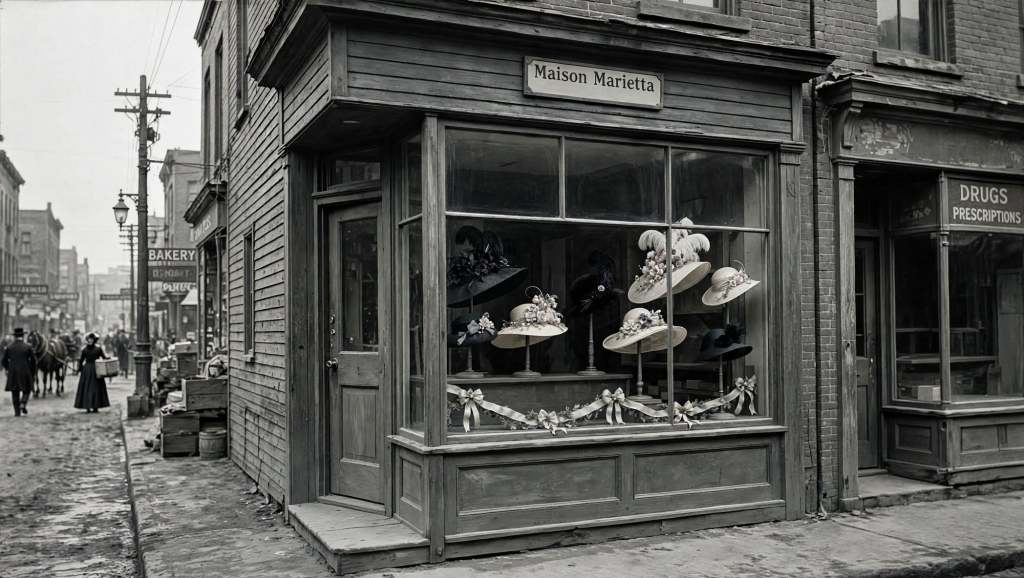
Marietta was real. She was a milliner, a maker of hats, who began her life near the cane fields outside New Orleans and built, stitch by stitch, a name that reached the counters of Marshall Field’s in Chicago. Then they took her name, and for a long time she was only a number in an institution’s ledger.
This novel begins when three sisters start pulling on a thread of family history: letters, legal documents, photographs, and stories half-remembered around kitchen tables. At least half of what you will read is documented fact. The rest is imagined honestly, in the spaces between the records, where a life actually gets lived.
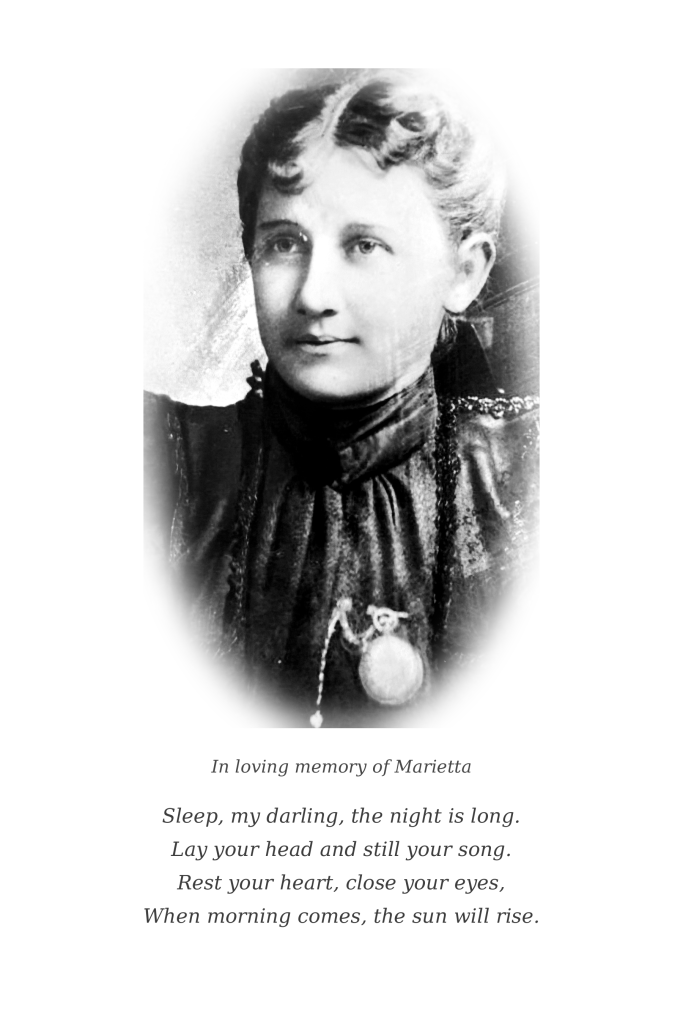
The silver thimble engraved M.R. passed down through the family is real. The shop was real. The train she boarded with everything still ahead of her was real. Her photograph appears inside the book, and the woman looking back at you is Dorothy’s grandmother.
The Research
Piecing her story back together took years of searching by Dorothy and her sisters: adoption papers, a single surviving letter, and a death certificate that led them to Kankakee State Hospital, where their grandmother spent the last eight years of her life. Her sons passed through Chicago’s children’s institutions, including the Kinderheim, before being adopted into separate families. The adoptions became final only after their mother’s death.
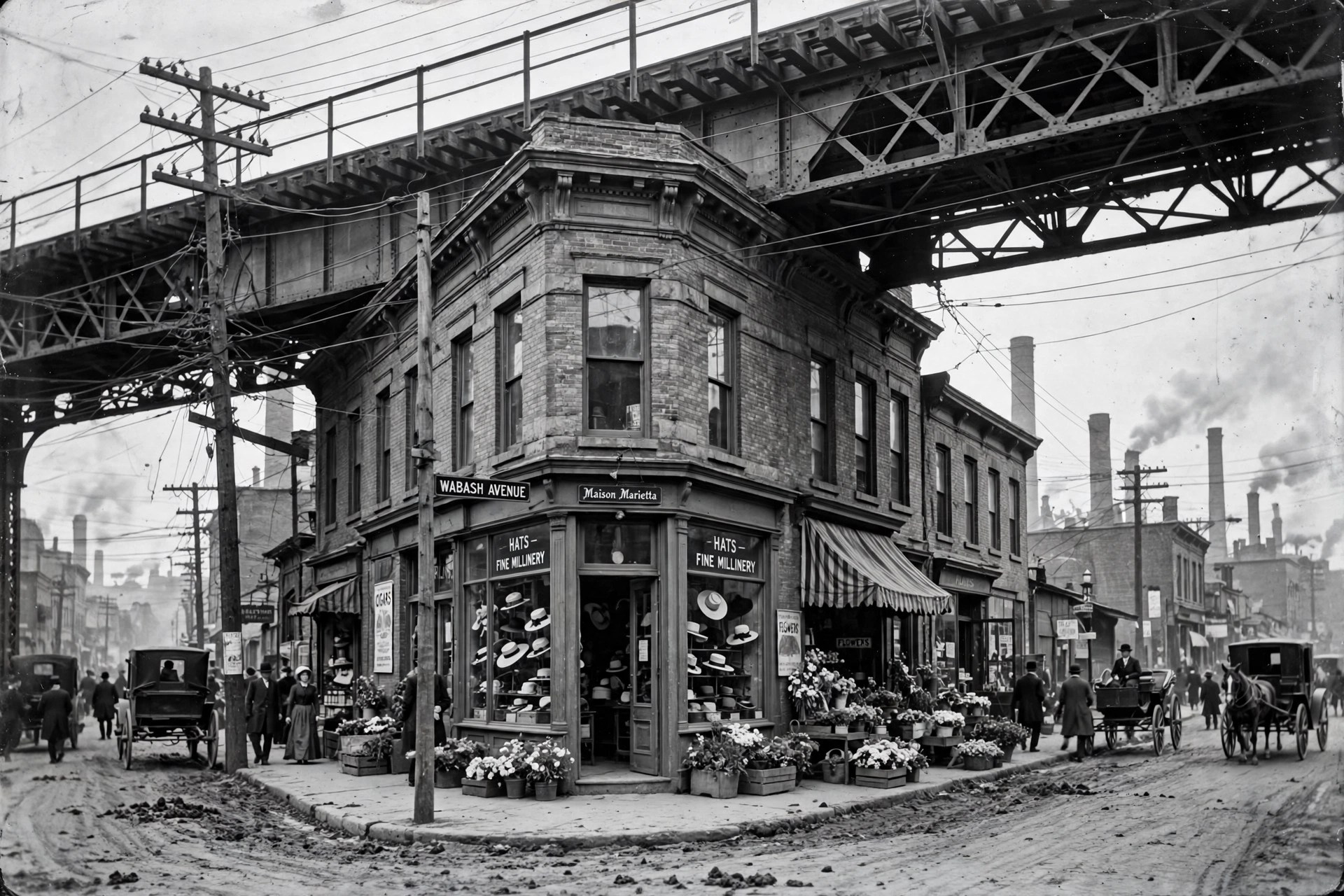
Beyond the family records, the novel draws on research into turn of the century millinery: the language of trims and blocks, the rise of the Gibson Girl silhouette, and the great department store hat counters at Marshall Field’s and Gage Brothers along Chicago’s Wabash and Michigan Avenue corridor. It also reaches into darker corners of the era: the science and the misunderstanding of pellagra and institutional diets, early psychiatric commitment practices, and the fear and wonder of a city transformed by the World’s Columbian Exposition.
Every hat, every street name, and every hardship in The Invisible Stitch is anchored to something real, even when the exact words spoken were left for Dorothy to imagine.
Marietta’s story is told in full in The Invisible Stitch.
 Dorothy Howard